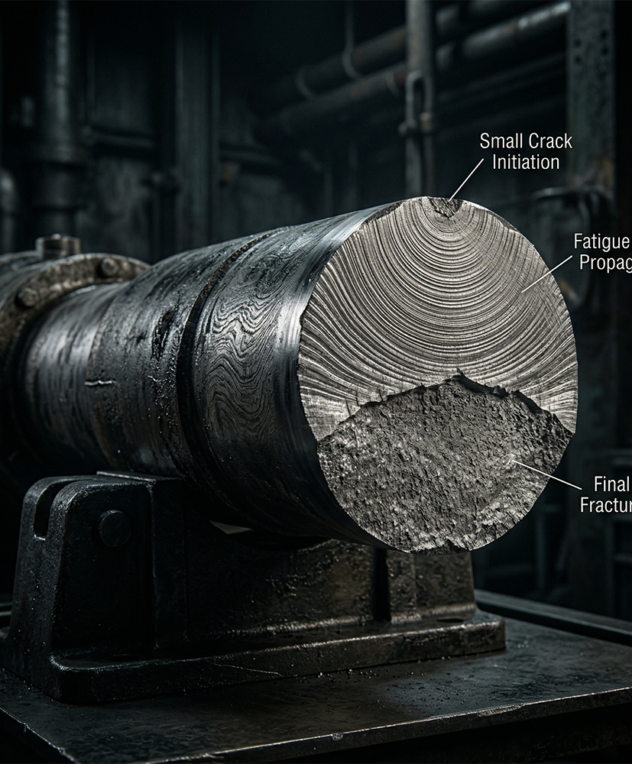

Why aerospace & defence buyers avoid automotive-optimized forging suppliers
Why This Comparison Matters to Buyers
At first glance, automotive forging suppliers appear attractive:
- Large presses
- Advanced automation
- Competitive pricing
- High throughput
Yet many aerospace and defence buyers intentionally exclude automotive-optimized suppliers during qualification. This is not about capability gaps, it is about system misalignment. Aerospace and defence supply chains are designed to minimize long-term risk, not maximize efficiency.
Automotive Forging and Critical Forging Are Built on Opposite Assumptions
Automotive Forging Assumes:
- High, predictable volumes
- Stable part geometry
- Continuous production
- Cost and cycle time optimization
- Statistical process control through repetition
Aerospace & Defence Forging Assumes:
- Low and irregular volumes
- Long dormancy between orders
- Engineering changes mid-program
- Long service life (15–30 years)
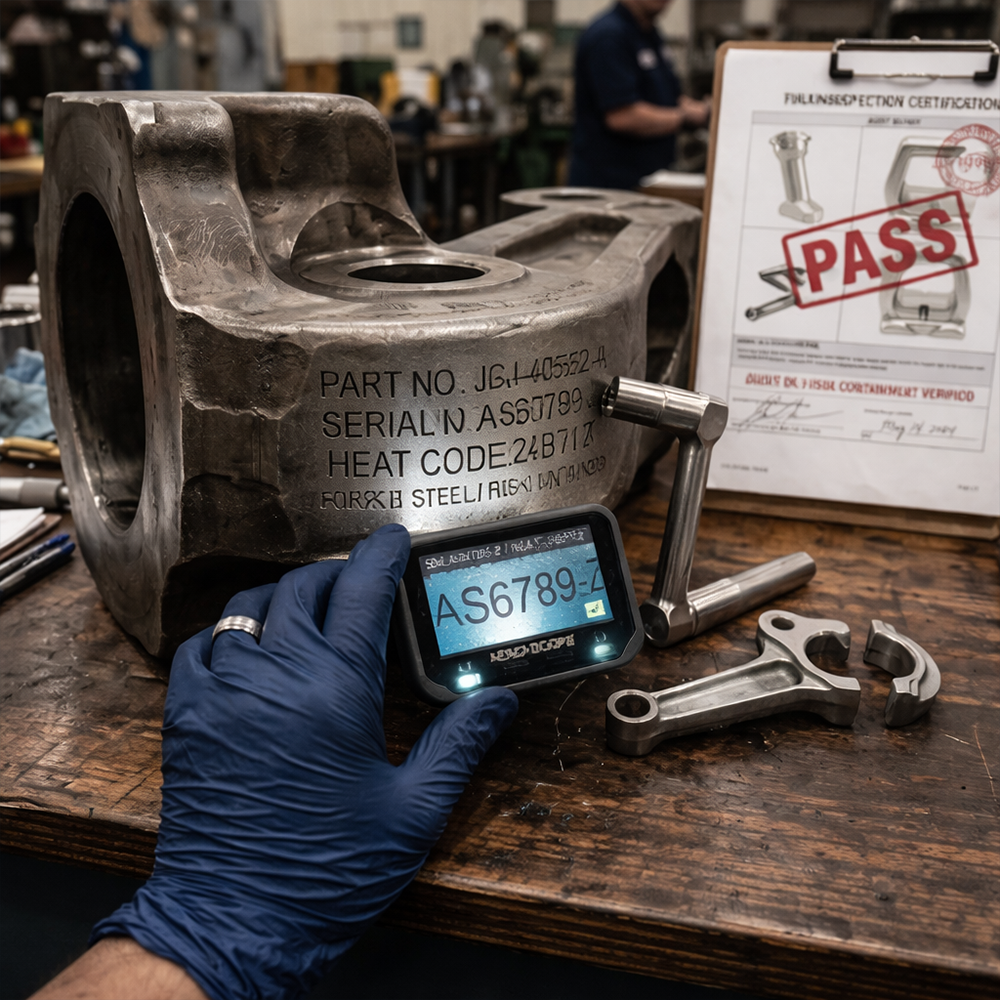
- Zero tolerance for traceability gaps
When a system is optimized for one model, it often fails under the other.
1. High-Volume Efficiency Conflicts with Low-Volume Stability
Automotive systems rely on repetition to maintain quality.
In aerospace and defence:
- A part may be produced once every few years
- Operators change
- Tooling sits idle
- Process memory must be preserved through documentation
Buyers avoid suppliers whose quality depends on continuous repetition rather than controlled systems.
2. Traceability Discipline Is Fundamentally Different
Automotive traceability is often:
- Batch-level
- ERP-driven
- Optimized for recall efficiency
Aerospace and defence traceability requires:
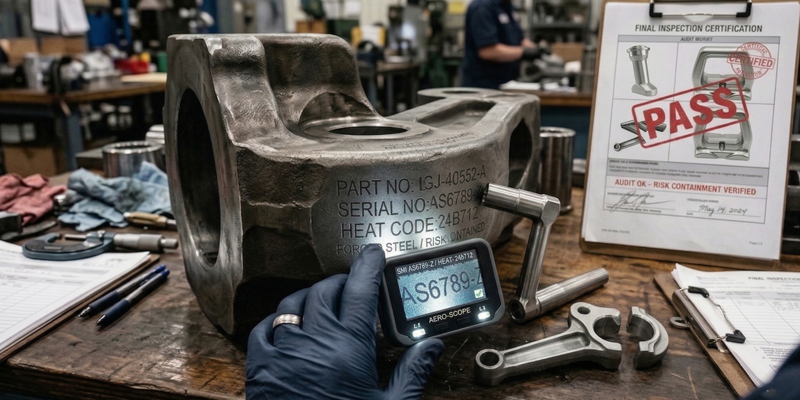
- Heat-level material identity
- Lot-wise segregation
- Physical and documentary linkage across forging, machining, heat treatment, and inspection
Automotive systems frequently break down under this level of granularity.
3. Special Processes Are Treated More Lightly in Automotive Systems
In automotive environments:
- Heat treatment and NDT are standardized and high-throughpu
- Risk is spread across millions of parts
In aerospace and defence:
- Every part is critical
- Heat treatment and NDT are audited as approval gates
- Validation outweighs speed
Buyers avoid suppliers who treat special processes as routine rather than qualification-critical.
4. Audit Intensity Is Higher Than Automotive Cultures Expect
Automotive audits emphasize:
- Process capability indices
- Throughput consistency
- Cost controls
Aerospace and defence audits focus on:
- System resilience
- Deviation handling
- Long-term documentation retention
- Corrective action effectiveness
Suppliers accustomed to “audit events” struggle when audits become continuous oversight.
5. Cost Optimization Can Conflict with Risk Containment
Automotive forging succeeds by:
- Minimizing material usage
- Reducing inspection where statistically justified
- Pushing yield and efficiency
Critical programs prioritize:
- Conservative process margins
- Deeper inspection
- Lower tolerance for undocumented variation
Buyers interpret aggressive cost optimization as hidden risk in critical supply chains.
6. Engineering Ownership Is Often Shallow
Automotive forging frequently operates with:
- OEM-defined processes
- Locked tooling
- Limited engineering discretion
Aerospace and defence buyers expect suppliers to:
- Own forging route design
- Justify deformation logic
- Engineer grain flow to load paths
Suppliers who “run what is given” are viewed as execution vendors, not partners.
7. Long-Term Accountability Matters More Than Capacity
Defence and aerospace buyers assess:
- Can this supplier support the program for decades?
- Will documentation survive personnel turnover?
- Can production restart cleanly after dormancy?
Large automotive capacity does not answer these questions.
Common Red Flags Buyers See in Automotive-Optimized Suppliers
Buyers become cautious when:
- Quality systems depend heavily on automation
- Documentation lags behind execution
- Traceability becomes manual at low volumes
- NCRs recur without systemic fixes
- Cost is used as the primary justification
These signals suggest misaligned operating philosophy.
Why Some Suppliers Successfully Serve Both and Most Don’t
A small number of suppliers can serve both automotive and critical sectors.
They succeed by:
- Separating systems, not just customers
- Running dedicated quality frameworks
- Treating aerospace & defence as a distinct business model
Most suppliers underestimate this shift — and fail qualification.
How Vinir Is Structured Differently
Vinir is not optimized for automotive scale.
Its systems are built around:
- High-mix, low-volume execution
- Engineering-led forging routes
- Forge-to-finish accountability
- Heat-level traceability
- Audit-ready documentation
This makes Vinir naturally aligned with aerospace and defence buyer expectations.
FAQ
Does this mean automotive suppliers can never qualify?
No, but they must fundamentally adapt systems, not just add certifications.
Is cost less important in aerospace and defence?
Cost matters, but only after risk and reliability are addressed.
Do buyers explicitly reject automotive suppliers?
Often yes — especially for first-time qualification.
Can one plant serve both sectors?
Only with clearly separated systems and controls.