
Stainless Steel Forging Manufacturer India: 316L, Duplex, and Super Duplex
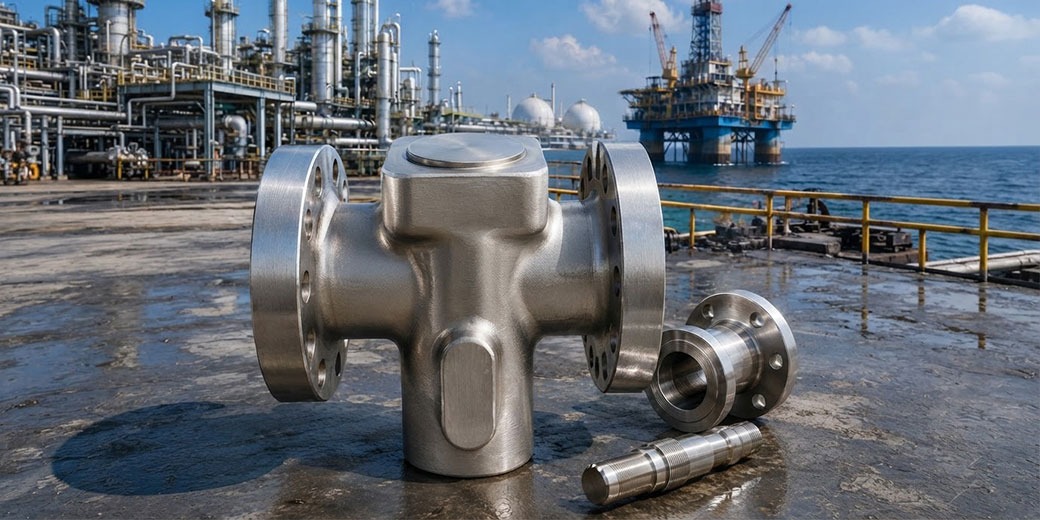
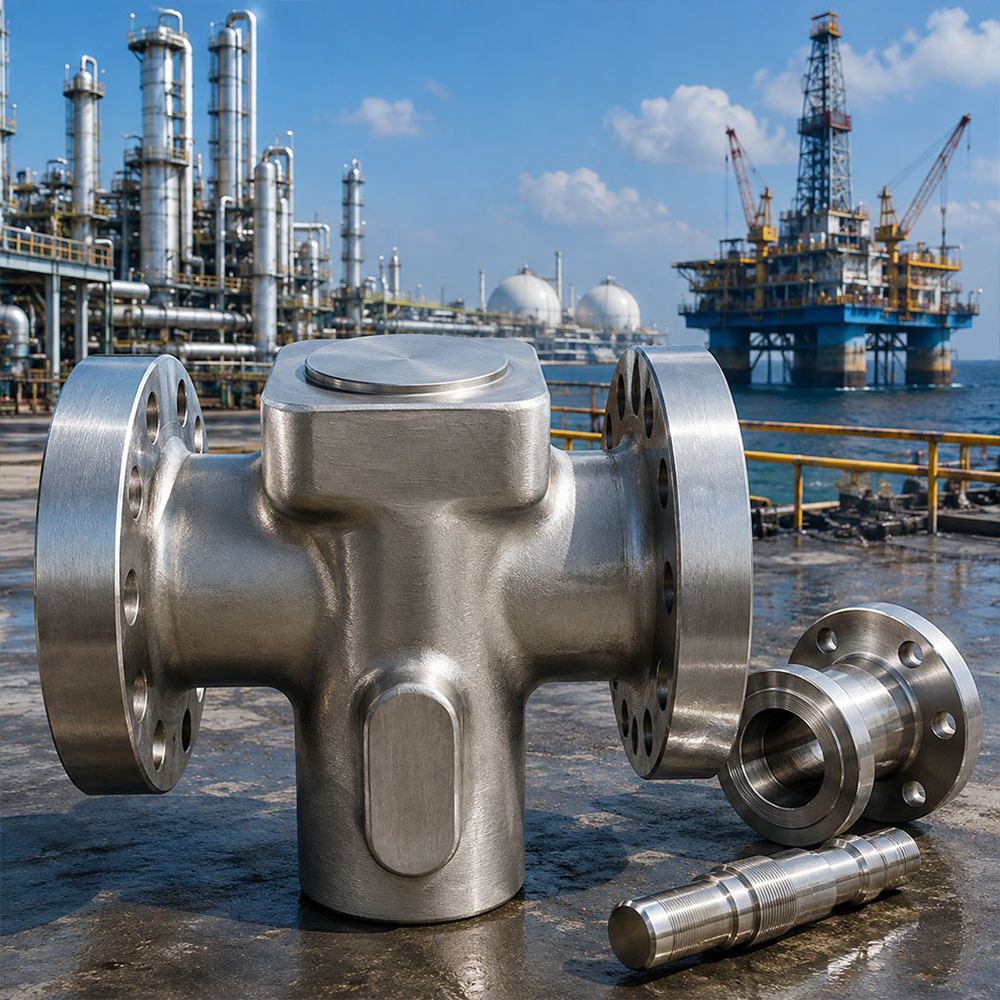
Stainless steel forging — producing components from austenitic (316L, 304L), ferritic, martensitic, duplex (2205), and super duplex (2507) stainless steel is among the largest market segments for Indian forging manufacturers serving oil and gas, nuclear, food and pharmaceutical, and marine applications globally.
India is a significant stainless steel forging exporter: the combination of competitive raw material sourcing (Indian stainless steel producers including JSW Steel, Tata Steel, and Jindal Stainless) and AS9100D and API 20B certified forge shops creates a strong export proposition. Vinir’s stainless steel forging capability spans the full range from small precision SA-182 F316L nozzle forgings to large ring-rolled flanges for offshore applications.
| Grade / Alloy | UNS | Primary Application | Key Standard |
| Austenitic 316L | S31603 | Pressure vessel nozzles, piping flanges, valve bodies | SA-182 F316L, ASME VIII, API 20B |
| Austenitic 304L | S30403 | Cryogenic LNG service, food/pharma, low temperature | SA-182 F304L, ASME VIII |
| Duplex 2205 | S31803 / S32205 | Offshore topside piping, heat exchangers, seawater | SA-182 F51, API 20B, NORSOK M-630 |
| Super duplex 2507 | S32750 | Subsea valve bodies, manifolds, high-chloride seawater | SA-182 F53, API 20B PSL 3/4 |
| Martensitic 410/F6a | S41000 | Valve trim, pump shafts, gate valve stems | SA-182 F6a, API 600 |
India’s stainless steel forging industry benefits from a strong domestic raw material supply chain unlike titanium and nickel alloys where India is heavily import-dependent for billet, austenitic stainless steel (316L, 304L) billet is available from Indian steel producers including JSW Steel’s Stainless division (Vijayanagar, Karnataka), Jindal Stainless (Hisar, Haryana), and Tata Steel’s stainless operations. Domestic billet sourcing reduces procurement lead time (4–6 weeks from Indian mills versus 8–12 weeks from European or Japanese mills) and reduces foreign exchange exposure.
Austenitic stainless steel 316L (A182 F316L) forging is the workhorse stainless steel for oil and gas pressure equipment used for valve bodies, pressure vessel nozzles, piping flanges, and heat exchanger tubesheet forgings in applications where carbon steel is insufficient but duplex stainless is over-specified. 316L’s 2–3% molybdenum addition provides pitting corrosion resistance adequate for low-to-moderate chloride concentration service. For LNG cryogenic service, 304L is specified for flanges and nozzles that must operate at liquid nitrogen temperatures (-196°C) a key specification requirement verified by NABL Charpy testing at -196°C.
Duplex 2205 (F51) and super duplex 2507 (F53) forging — where quality discipline in solution annealing temperature and quench rate, G48 corrosion testing, ferritescope measurement, and NORSOK documentation separates credible duplex forging manufacturers from those who produce inadequate microstructures. Vinir’s G48 corrosion test capability ASTM G48 Method A at 22°C for duplex 2205 and 40°C for super duplex 2507 is the key differentiator for NORSOK M-630 and API 20B PSL 3 duplex and super duplex supply.
Martensitic stainless steel — particularly F6a (13% chromium) is used for valve trim components and pump shaft forgings where hardness and wear resistance are required in addition to corrosion resistance. F6a is heat treated to achieve 22–29 HRC hardness adequate for erosion and galling resistance in process valve service. For NACE sour service, maximum 22 HRC is the hardness limit even for F6a which constrains the achievable tensile strength and limits its use in the most demanding sour gas applications.
Vinir Capability
- API 20B PSL 1–3. SA-182 F316L, F304L, F317L austenitic stainless forgings solution annealing at 1,040–1,120°C with rapid quench.
- SA-182 F51 duplex 2205 and F53 super duplex 2507 forging solution annealing at alloy-specific temperatures with immediate rapid water quench, ferritescope verification (35–65% ferrite), G48 corrosion test.
- SA-182 F6a martensitic stainless quench and temper to specified hardness range.
- NABL Charpy at -46°C (standard oil and gas) and -196°C (LNG cryogenic).
- PMI on 100% of stainless and CRA deliveries.
- Domestic Indian stainless billet sourcing: JSW Steel, Jindal Stainless, and Tata Steel.
- Passivation per ASTM A967.
- TPI by Bureau Veritas and Intertek.