
Forging supplier qualification: what global oems actually evaluate
Supplier Qualification Is a Risk Decision, Not a Price Comparison
When global OEMs evaluate forging suppliers, the decision is rarely based on cost alone.
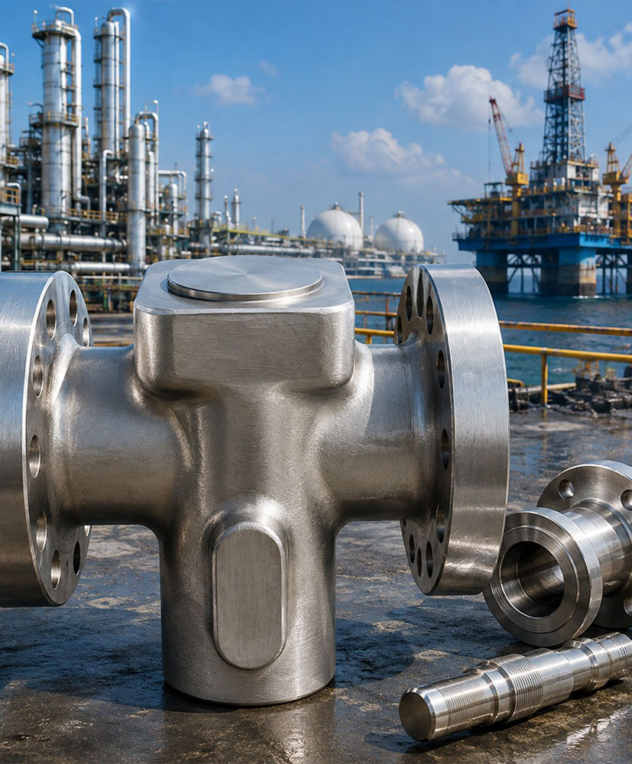
In critical industries — oil & gas, aerospace, defence, nuclear, marine, railway, energy, heavy equipment — supplier qualification is fundamentally a risk assessment exercise.
The central question is not: “Can this supplier produce the part?”
It is: “Can this supplier consistently produce compliant, structurally reliable components over the lifecycle of our program?”
Qualification determines whether a forging manufacturer becomes part of a long-term industrial ecosystem or remains a transactional vendor.
Stage 1: Technical Capability Review
Before audits or pricing discussions begin, OEM engineering teams assess whether the supplier’s technical foundation aligns with application requirements.
This review typically examines:
- Press capacity relative to component size
- Forging process type (open die, closed die, ring rolling)
- Reduction ratio capability
- Grain flow planning experience
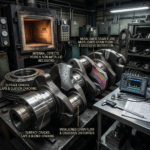
- Heat treatment infrastructure
- Machining integration
- NDT capability
However, capability on paper is not enough.
OEMs evaluate whether the supplier understands the structural demands of the application — fatigue, pressure integrity, creep resistance, corrosion, or impact loading.
Technical alignment is the first filter.
Stage 2: Quality Management System Evaluation
Once baseline capability is established, buyers examine quality system maturity.
This may involve:
- ISO or AS9100D certification review
- Documentation control processes
- Traceability architecture
- Non-conformance handling procedures
- Corrective and preventive action systems
- Calibration and equipment maintenance records
The focus is not certification alone, but implementation depth.
OEM auditors often compare documented procedures against shop-floor execution to evaluate system authenticity.
Stage 3: Metallurgical and Process Discipline
For critical forgings, metallurgical control becomes central to qualification.
OEMs frequently assess:
- Documented reduction ratio calculations
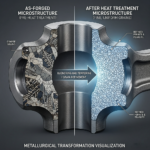
- Heat treatment cycle records
- Microstructure verification processes
- Mechanical testing repeatability
- Ultrasonic inspection acceptance history
Reduction discipline, grain flow alignment, and structural densification reflect process maturity.
Suppliers who cannot articulate deformation strategy often struggle during technical qualification.
Stage 4: Traceability and Documentation Continuity
Traceability gaps represent one of the most common causes of supplier rejection.
Qualification teams review whether the supplier can link:
- Raw material heat number
- Forging batch
- Heat treatment cycle
- Machining stage
- Inspection results
Documentation must remain coherent and retrievable.
In regulated sectors such as nuclear and aerospace, traceability continuity is non-negotiable.
Suppliers lacking structured documentation architecture often fail at this stage.
Stage 5: Inspection Infrastructure and NDT Competence
Inspection capability is assessed not only by equipment availability but by execution discipline.
OEMs evaluate:
- NDT certification of personnel
- Procedure documentation
- Calibration systems
- Inspection reporting format
- Third-party coordination experience
Repeatability matters more than isolated inspection success.
Suppliers must demonstrate that inspection is integrated into process control rather than appended at final dispatch.
Stage 6: Pilot Orders and First Article Approval
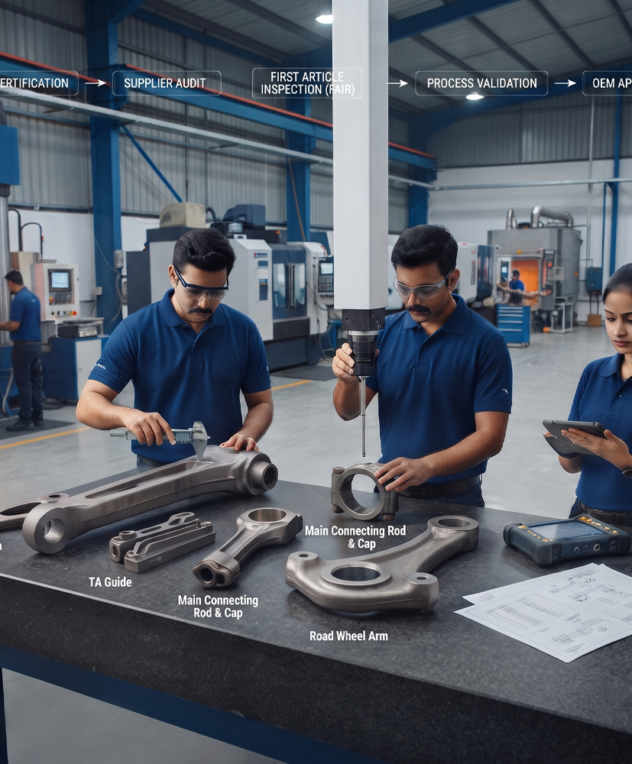
Qualification often includes pilot production or First Article Inspection (FAI).
This stage validates:
- Dimensional accuracy
- Mechanical property compliance
- Documentation completeness
- Process repeatability
Pilot success demonstrates that theoretical capability translates into practical reliability.
In aerospace and defence programs, this stage may be extended across multiple evaluation cycles.
Stage 7: Long-Term Stability Assessment
For lifecycle-driven industries, OEMs evaluate supplier sustainability.
Considerations include:
- Financial stability
- Workforce competence retention
- Equipment maintenance planning
- Capacity scalability
- Change management systems
Qualification is not limited to current capability. It evaluates whether the supplier can support the program across years or decades.
Common Reasons Forging Suppliers Fail Qualification
Even technically capable manufacturers may fail qualification due to:
- Weak documentation control
- Inconsistent traceability
- Poor non-conformance response
- Lack of reduction ratio validation
- Heat treatment record gaps
- Unstructured audit preparation
Qualification failure is often systemic rather than technical.
OEMs prioritize discipline over improvisation.
Why High-Mix, Non-Automotive Manufacturers Often Align Better
Critical industry programs frequently involve:
- Custom geometries
- Moderate batch sizes
- Variable compliance requirements
- Project-specific documentation
Manufacturers structured around high-mix production models are often better prepared for this variability than high-volume automotive systems optimized for repetition.
Process elasticity combined with documentation discipline becomes a competitive advantage.
Forging Supplier Qualification at Vinir Engineering
Vinir Engineering operates as a non-automotive, high-mix, forge-to-finish manufacturer structured around qualification-driven manufacturing discipline.
Our systems emphasize:
- Documented reduction ratio validation
- Integrated forging and machining coordination
- Controlled heat treatment documentation
- Continuous material traceability
- Structured inspection architecture
- Audit-ready documentation systems
Serving oil & gas, aerospace, defence, nuclear, marine, railway, energy, and heavy equipment sectors requires qualification maturity rather than capacity metrics alone.
If you are evaluating forging suppliers for a critical industrial program, Vinir’s engineering team can support technical review, compliance discussion, and structured qualification engagement.
Connect with Vinir Engineering to discuss your forging supplier qualification requirements.