
Forging Supplier for Indian Railways: RDSO Approved and IRIS Certified
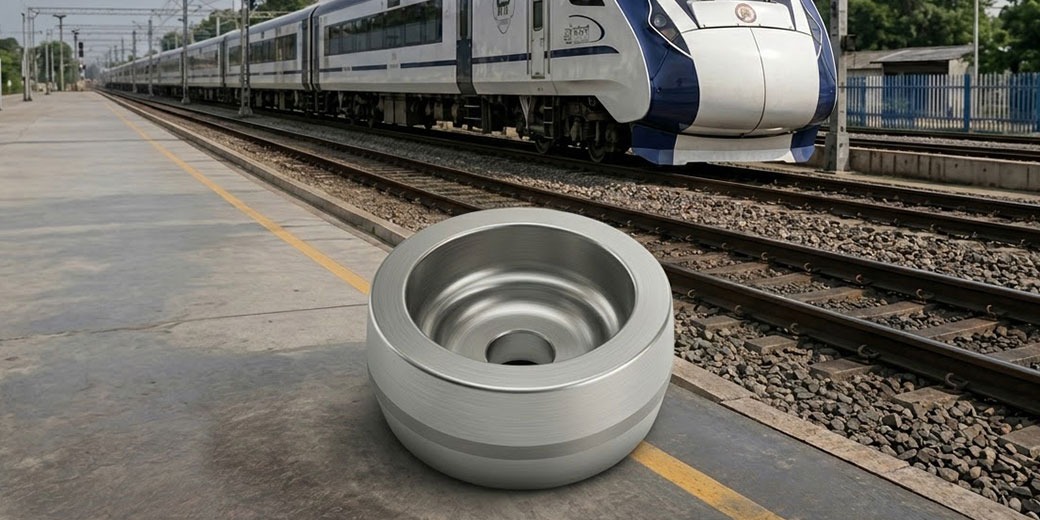
Indian Railways — the world’s fourth-largest railway network with 65,000+ route kilometres is undergoing its most ambitious modernisation in history: Vande Bharat Express (semi-high-speed), 400 km/h Bullet Trains (Mumbai-Ahmedabad MAHSR), freight corridor upgrades, and metro rail expansion in 20+ cities. RDSO (Research Designs and Standards Organisation) is the technical authority that approves forging suppliers for Indian Railways procurement RDSO approval combined with IRIS (ISO 22163) certification positions Indian forging manufacturers as preferred domestic suppliers for railway axle, bogie, and structural forgings.
| Programme | Forging Category | Material / Standard | Volume Potential |
| Vande Bharat Express (semi-HSR) | Wheel set axle forgings, bogie structural | EA4T equiv, IS 2004 | 100+ trainsets in production |
| MAHSR Bullet Train (Shinkansen) | High-speed axle forgings (JIS E 4502 / EA4T) | Make in India escalating | 18 trainsets initial, 100+ planned |
| LHB coaches (WAP-5, WAP-7) | LHB bogie axle, bogie bolster | EA1T / EA4T equivalent | 50,000+ LHB coaches in fleet |
| Dedicated Freight Corridor (DFCC) | Freight wagon axle, bogie side frame | EA1N, carbon steel | 20,000+ wagons planned |
| Metro Rail (Delhi, Mumbai, Pune) | Metro car bogie axle, wheel set | EA1T / EA4T for high-speed metro | Multi-city expansion ongoing |
RDSO (Research Designs and Standards Organisation) — headquartered in Lucknow under the Ministry of Railways is the technical authority that develops standards, qualifies vendors, and monitors quality for all railway rolling stock components used on Indian Railways. RDSO’s vendor approval system requires quality system assessment (ISO 9001 minimum, IRIS preferred), capability assessment for the specific forging category, qualification test production with RDSO-witnessed inspection, and periodic surveillance. RDSO-approved forging vendors are listed on RDSO’s approved vendor list a prerequisite for supplying to wagon builders, coach factories, and locomotive manufacturers procuring for Indian Railways.
The Vande Bharat Express programme — India’s domestically developed semi-high-speed train (160 km/h maximum speed) has progressed from the original 10 trainsets to over 100 trainsets ordered across multiple variants (Vande Bharat Express, Vande Bharat Metro, Vande Bharat Sleeper). Each Vande Bharat trainset uses bogie axle forgings equivalent to EA4T specification. The Make in India requirement means that RDSO-approved domestic Indian forging manufacturers supply these axle forgings replacing imported axle forgings that were used in early production trainsets.
The Mumbai-Ahmedabad High Speed Rail (MAHSR) project — India’s first bullet train using Japanese Shinkansen E5 Series technology is the most technically demanding railway forging programme in Indian history. The Shinkansen axle specification (JIS E 4502) is comparable to EN 13261 EA4T. The MAHSR project’s Make in India escalation schedule requires progressively increasing domestic content in successive trainset deliveries axle forgings are identified as a priority domestic content item.
The DFCC (Dedicated Freight Corridor Corporation) — operating the Eastern and Western Dedicated Freight Corridors operates a new fleet of BOXNHL high-capacity wagons. With 20,000+ wagons planned and ongoing replacement cycles for Indian Railways’ 300,000+ wagon fleet, the freight wagon axle forging market is among the highest-volume domestic railway forging opportunities for Indian manufacturers.
Vinir Engineering — Capability for this Market
- IRIS certified (ISO 22163) – verifiable in the IRIS Portal.
- RDSO vendor approval process underway quality system and capability submission in progress.
- EA4T equivalent axle forgings for Vande Bharat and MAHSR programmes per EN 13261 with JIS E 4502 equivalency documentation.
- EA1N and EA1T freight axle forgings.
- LHB bogie structural forgings in S355NL and 4340.
- 100% UT with EA4T calibration standard per EN 13261 Appendix A.
- Full MT of finished axle surface.
- NABL Charpy at -20°C.
- Proximity to Integral Coach Factory (ICF Chennai, 350 km from Hosur) and Chittaranjan Locomotive Works.