
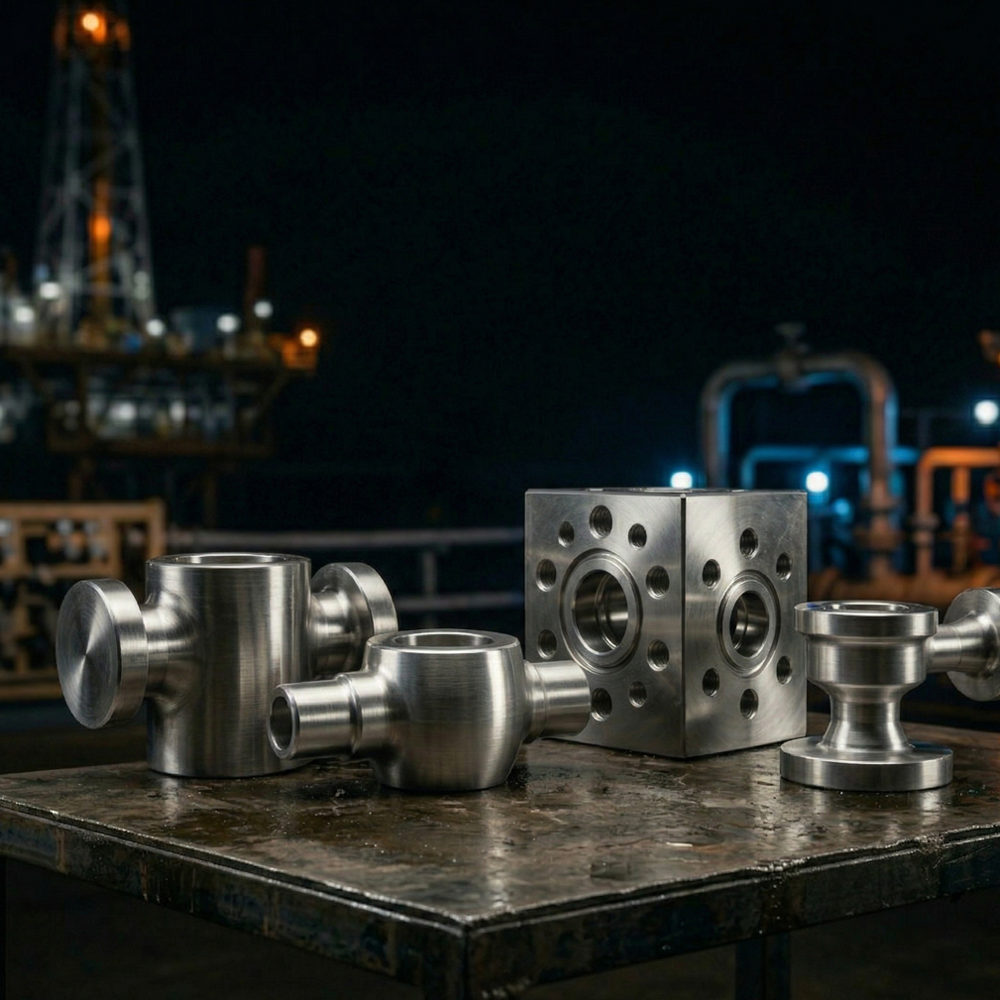
Critical forging requirements in the oil & gas industry: materials, compliance, and manufacturing controls
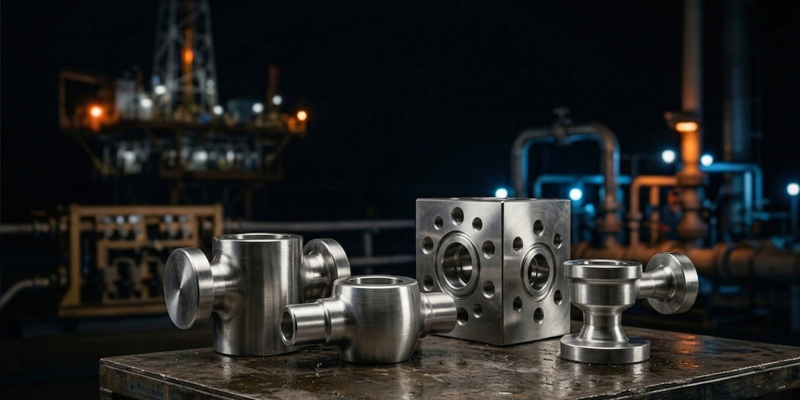
Why Oil & Gas Forgings Operate Under Zero-Margin Conditions
In the oil & gas industry, forged components operate under some of the harshest mechanical and environmental conditions in heavy engineering.
They face:
- High internal pressures
- Cyclic thermal stresses
- Corrosive environments
- H₂S exposure (sour service)
- Subsea loading conditions
- Long operational life cycles
Failure of a forged valve body, bonnet, casing head, or pressure-retaining component can result in catastrophic environmental, financial, and safety consequences.
As a result, oil & gas forgings are not simply machined metal parts. They are regulated structural elements subject to strict API standards, material pedigree control, and documented process validation.
Understanding these requirements is essential when evaluating forging manufacturers for upstream, midstream, and downstream applications.
1. Pressure-Retaining Integrity: The Core Engineering Requirement
Oil & gas forged components are often part of:
- Wellhead systems
- Christmas trees
- Gate valves
- Blowout preventers
- Subsea assemblies
- Pressure vessel systems
These components must withstand:
- Internal pressure loads
- Shock loading
- Fatigue cycles
- Corrosion stress cracking
The forging process must ensure:
- Sufficient reduction ratios
- Uniform grain structure
- Absence of internal voids
- Controlled mechanical properties
Structural soundness is non-negotiable.
2. API Standards Governing Oil & Gas Forgings
The American Petroleum Institute (API) defines key standards for forged components in oil & gas applications.
Relevant specifications include:
- API 20B (forged components)
- API 20C (alloy and carbon steel bolting)
- API 20E (non-metallic sealing materials and other components)
These standards require:
- Controlled manufacturing procedures
- Full material traceability
- Inspection and testing validation
- Qualification documentation
- Audit compliance
API compliance ensures that forgings meet both mechanical performance and documentation requirements.
3. Material Selection in Oil & Gas Forgings
Oil & gas applications demand material grades capable of resisting:
- Hydrogen embrittlement
- Sulfide stress cracking
- High-temperature creep
- Corrosion fatigue
Common material families include:
- Carbon steels
- Low-alloy steels
- Stainless steels
- Duplex and super duplex steels
- Nickel-based alloys (depending on application)
Material pedigree must be documented through:
- Mill test certificates
- Heat number traceability
- Chemical composition verification
- Mechanical property validation
Improper material selection is a major cause of field failure.
4. Sour Service and NACE Compliance
In sour service environments containing hydrogen sulfide (H₂S), forged components are vulnerable to:
- Sulfide stress cracking
- Hydrogen-induced cracking
- Delayed brittle failure
Compliance with NACE (National Association of Corrosion Engineers) standards is often mandatory.
This requires:
- Controlled hardness levels
- Specific heat treatment procedures
- Inclusion control
- Verified mechanical performance
Manufacturers must demonstrate metallurgical control aligned with sour service conditions.
5. Reduction Ratio and Internal Soundness
Oil & gas forgings often undergo ultrasonic testing (UT) to detect:
- Internal voids
- Inclusions
- Laminar defects
- Incomplete defect closure
Adequate reduction ratios during forging ensure:
- Porosity elimination
- Grain refinement
- Structural densification
Without sufficient deformation control, UT rejection rates increase.
Process discipline directly impacts inspection acceptance.
6. Heat Treatment Requirements
Heat treatment in oil & gas forgings influences:
- Yield strength
- Tensile strength
- Hardness
- Impact resistance
Strict documentation of:
- Furnace temperature
- Soaking time
- Cooling rate
- Batch traceability
is mandatory.
Auditors frequently cross-verify heat treatment charts against part marking.
7. Non-Destructive Testing Expectations
Oil & gas forgings typically require:
- Ultrasonic testing
- Magnetic particle inspection
- Hardness testing
- Impact testing
Inspection plans are often defined in customer specifications.
Third-party inspection agencies may witness:
- Mechanical testing
- NDT procedures
- Final dimensional verification
Compliance must be demonstrable, not assumed.
8. Documentation Depth in Oil & Gas Programs
Documentation packages often include:
- Raw material certificates
- Forging process records
- Heat treatment reports
- NDT results
- Mechanical testing certificates
- Dimensional inspection records
In some cases, documentation must be retained for the entire operational lifecycle.
Traceability continuity is critical.
9. Subsea vs Surface Application Differences
Subsea forgings face additional challenges:
- Hydrostatic pressure
- Corrosion resistance
- Long-term fatigue
- Limited maintenance access
Surface components may experience:
- Thermal cycling
- Abrasion
- Impact loads
Process selection and material choice must align with service environment.
10. Why High-Mix, Low-Volume Manufacturing Is Common in Oil & Gas
Oil & gas projects often require:
- Custom geometries
- Variable sizes
- Different material grades
- Project-specific documentation
Unlike automotive production, volumes are moderate and specifications vary by project.
Forging manufacturers must handle variability without compromising compliance.
Conclusion
Oil & gas forging requirements extend far beyond shape and size.
They encompass:
- Pressure integrity
- Metallurgical reliability
- Sour service compliance
- API-aligned manufacturing
- Documented traceability
- Audit readiness
Forged components in oil & gas applications operate under regulatory scrutiny and extreme service conditions. Supplier selection must prioritize structural discipline and compliance maturity.
Oil & Gas Forgings at Vinir Engineering
Vinir Engineering manufactures forged components for critical oil & gas applications with a structured focus on:
- API-aligned process control
- Controlled reduction ratio validation
- Sour service metallurgical awareness
- Integrated forge-to-finish manufacturing
- Centralized documentation continuity
- Audit-ready quality systems
As a non-automotive, high-mix forging manufacturer, Vinir supports custom pressure-retaining components with disciplined process architecture tailored for regulated environments.
If you are sourcing forged components for upstream, midstream, or downstream oil & gas systems, our engineering team can review drawings, material specifications, and compliance requirements to support qualification.
Connect with Vinir Engineering to discuss your oil & gas forging requirements.